A look inside the workbook
What it is and what it is for
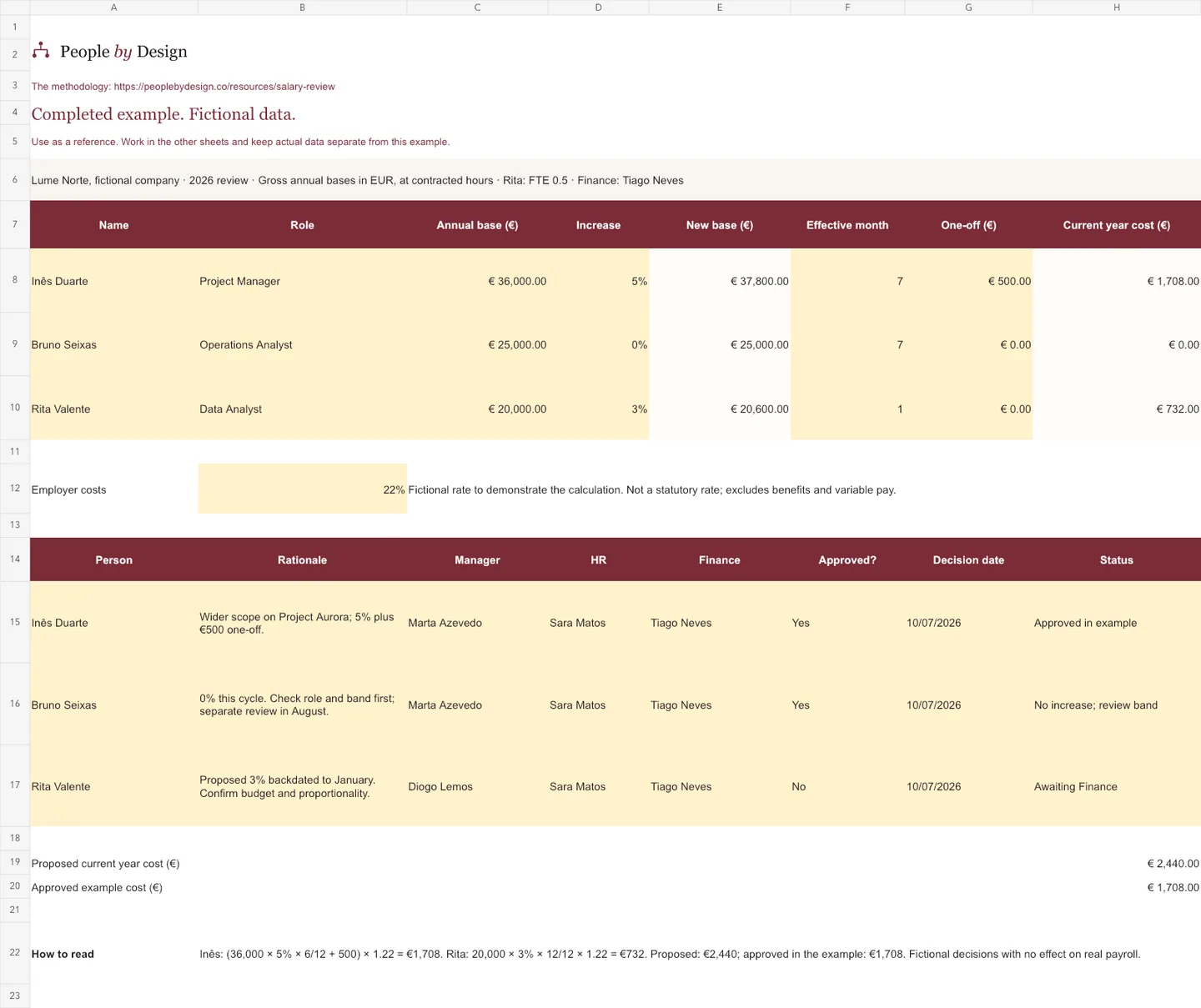
Salary review planning brings together budget, positioning and the rationale for proposals. This template calculates new annual base pay, annual increase and current year cost. It separates recurring increases from one-off payments and allows organisation-defined employer costs. It includes no market pay data.
Who uses it and when
HR prepares criteria and proposals with managers. Finance validates impact and leaders approve. Restrict individual data to authorised decision makers.
Suggestion: annual review with an agreed budget, plus documented exceptions for role changes or other justified needs.
How to use the template
- 1.Set budget, effective month and employer costs. Use gross annual base pay on the same basis and currency, without mixing benefits or variable pay.
- 2.Enter scenario rates. A blank individual increase uses the selected scenario; 0% preserves a decision to award no increase.
- 3.Document each proposal and review comparable roles, band positioning and exceptions. The spreadsheet does not perform this review itself.
- 4.Compare current year cost with budget, resolve incomplete data and then record approvals. Prepare communication separately.
Data access and limitations
Employer costs are a calculation assumption, not a validated tax rate. Current year cost uses effective months / 12. No payroll connection or automatic decision. Review finance, fairness and applicable obligations before communicating.
Common questions
Are annual cost and current year cost the same?
Not always. A July increase affects six months of that year but keeps the annual base increase in later years. A one-off payment affects its award year only.
Does the template recommend an increase?
No. Rates, criteria and budget are organisational decisions. Example figures are fictional and are not market recommendations.
References and use
These are practical People by Design resources. Suggested cadences and quantities are starting points, not universal standards. References consulted on 16 October 2026:
Adapt the workbook for internal use in your organisation. Preserve the source attribution. Avoid unnecessary personal data.
From template to implementation
If your challenge needs shared criteria, manager alignment and use in everyday routines, explore our work in this area.
Explore the related service