A look inside the workbook
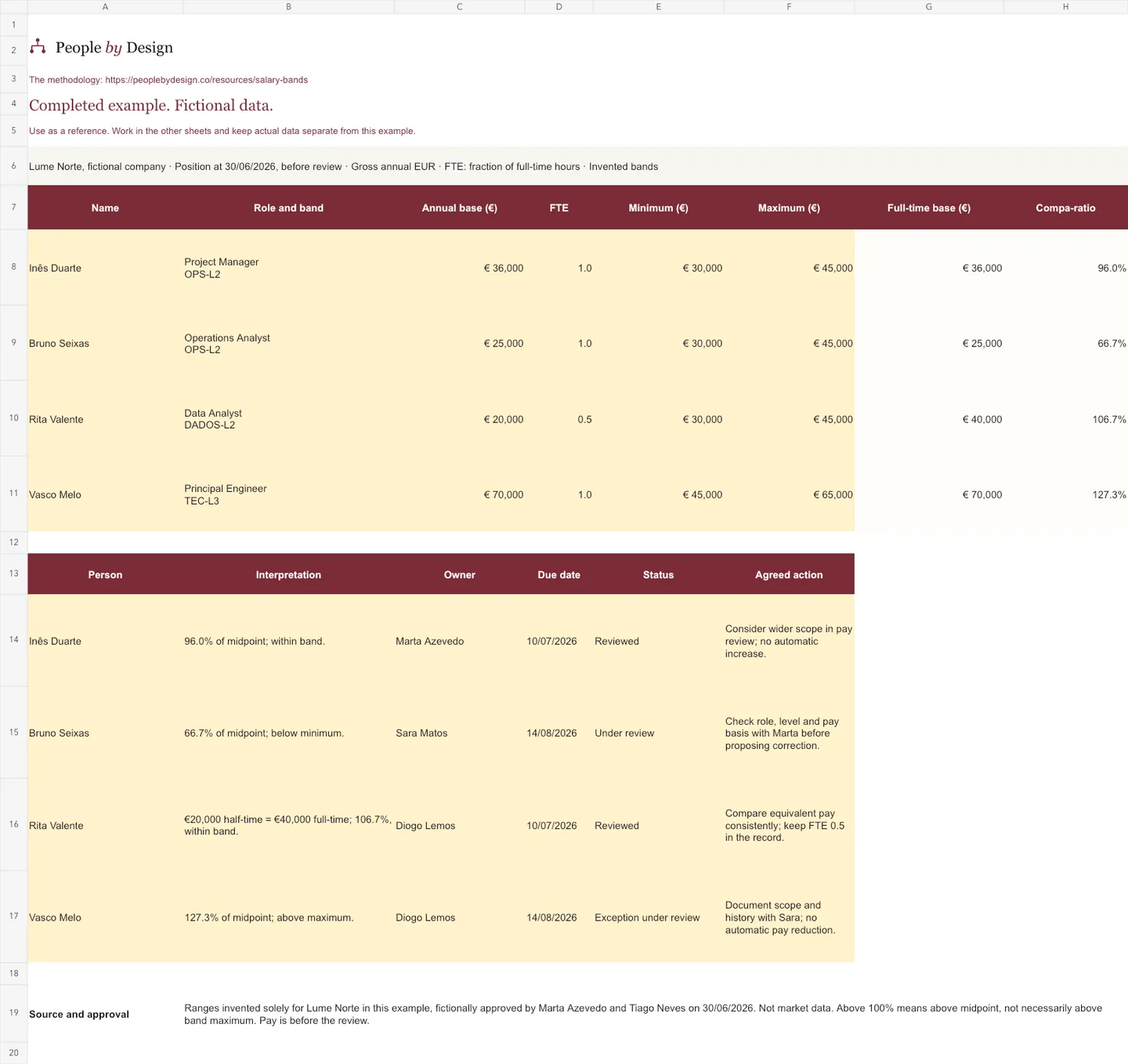
What it is and what it is for
A salary band defines a range for a job family and level. This template organises minimums and maximums, calculates midpoints and compares full-time equivalent salaries. A sound structure depends on role criteria, responsibilities and appropriate sources. No market benchmarks are included.
Who uses it and when
HR and leaders design job architecture and criteria. Finance validates affordability. Managers apply the structure with access limited to what they need.
Suggestion: annual review or after material changes to roles, strategy or reference data. Record source, date and scope for every range.
How to use the template
- 1.Define job families, levels and objective responsibility criteria. Compare work and context, not titles alone.
- 2.Assign a unique band code and enter full-time annual minimums and maximums. Record sources and dates; the midpoint is calculated.
- 3.Enter actual annual salary and FTE for each person. The template converts to full-time equivalent pay before comparing.
- 4.Review pay below or above ranges and incomplete inputs. Document explanations and review exceptions with people.
Data access and limitations
Positioning does not automatically decide increases or progression. The spreadsheet does not prove pay equity or assess work of equal value or legal compliance. Normalise currencies, periods, locations and pay components before comparing.
Common questions
How is compa-ratio calculated?
Full-time equivalent pay divided by the band midpoint. 100% means pay matches the midpoint, not a finding that pay is fair.
What is range penetration?
(Equivalent pay − minimum) / (maximum − minimum). It may be below 0% or above 100%; the template does not artificially cap it.
References and use
These are practical People by Design resources. Suggested cadences and quantities are starting points, not universal standards. References consulted on 16 October 2026:
Adapt the workbook for internal use in your organisation. Preserve the source attribution. Avoid unnecessary personal data.
From template to implementation
If your challenge needs shared criteria, manager alignment and use in everyday routines, explore our work in this area.
Explore the related service