A look inside the workbook
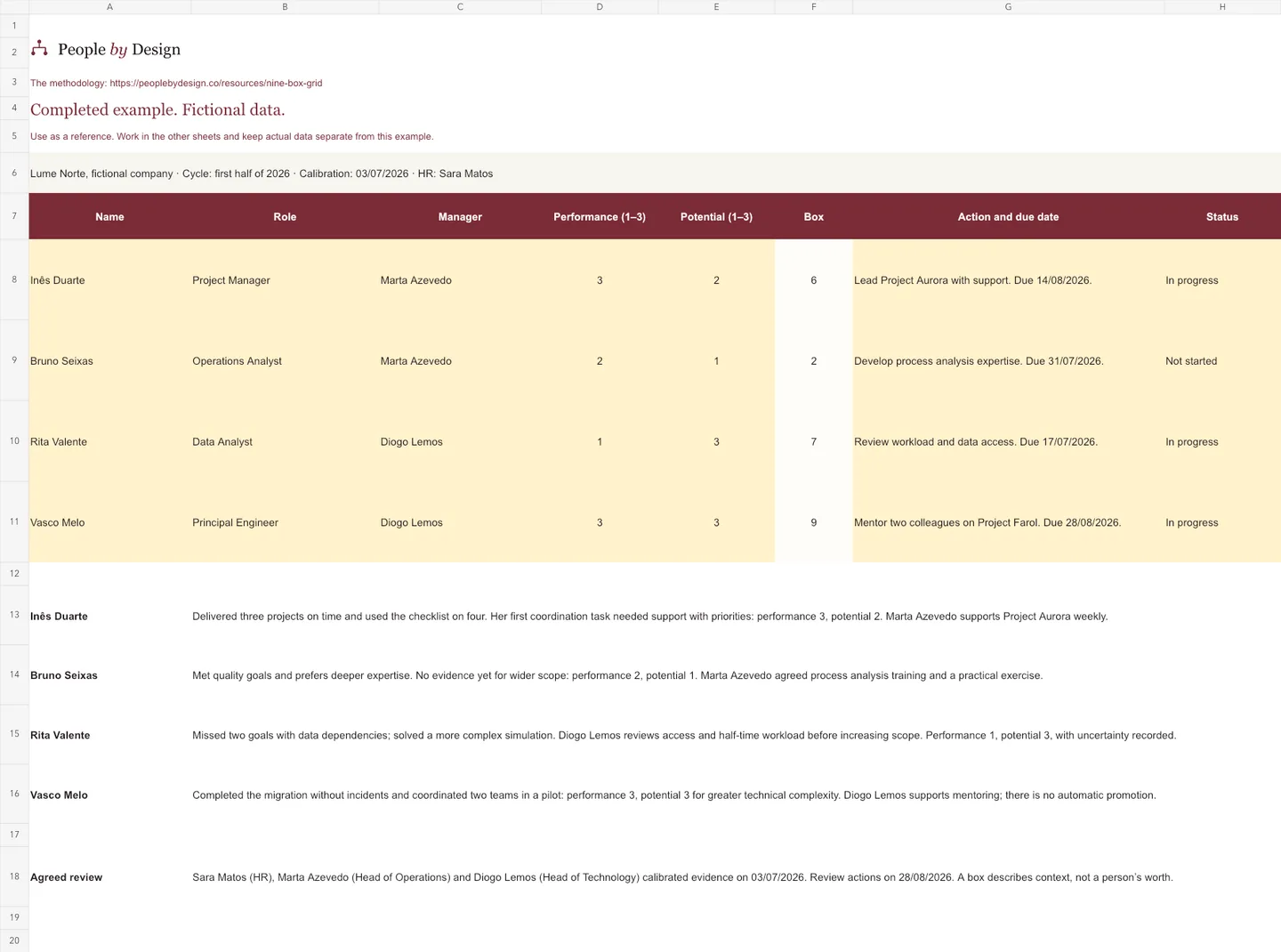
What it is and what it is for
The Nine Box Grid combines two distinct judgements: performance in the current role and potential for a defined future scope. Three levels on each axis create nine boxes. It makes team distribution visible and supports development and succession discussions. Each position is an evidence-based hypothesis in a particular context and period.
Who uses it and when
HR prepares criteria and facilitates calibration. Managers bring evidence from the period. Leaders align future needs and resources for action. Involve each person in discussions about aspirations and development without exposing colleagues’ ratings.
Start with a semiannual or annual review and quarterly action follow-ups. Revisit material role or context changes. This is a practical suggestion, not a universally validated frequency.
How to use the template
- 1.Define the session purpose, observation period and future scope. Answer “potential for what?” before rating anyone.
- 2.Agree three performance and three potential levels. Use observed results and behaviours, considering resources, time in role and barriers. People management is not the only growth path.
- 3.Ask managers for evidence before the meeting. The template requires evidence on both axes before counting someone. Missing evidence calls for investigation, not a low rating.
- 4.Calibrate across managers: which facts support the position, which opportunities did the person have and what alternative explanations exist? Record changes and reasons.
- 5.Choose proportionate actions: deepen expertise, remove obstacles, offer a supported experience or prepare succession. Assign support, an owner, a date and a review.
- 6.Discuss development and aspirations with the person. The grid does not replace feedback, listening or follow-through. Check that actions happened before rating again.
Data access and limitations
Restrict access to authorised HR and leaders and use codes where possible. Visibility, affinity and out-of-hours availability can bias ratings. The grid does not measure a person’s worth or automatically decide pay, promotion or dismissal. Do not impose box quotas.
Common questions
How do I read the nine boxes?
Performance increases left to right; potential increases bottom to top. Each grid number counts people. Box = performance + 3 × (potential − 1). Filter Box on Team to find person codes and actions.
Who should have access?
Only people who need the information to prepare and carry out development decisions. Agree access and retention before the cycle. Each person needs a useful conversation about themselves, not colleagues’ data.
What if potential cannot be assessed?
Leave the rating incomplete. Clarify future scope, gather evidence and listen to the person. Lack of opportunity or information is not lack of ability.
References and use
These are practical People by Design resources. Suggested cadences and quantities are starting points, not universal standards. References consulted on 16 October 2026:
Adapt the workbook for internal use in your organisation. Preserve the source attribution. Avoid unnecessary personal data.
From template to implementation
If your challenge needs shared criteria, manager alignment and use in everyday routines, explore our work in this area.
Explore the related service